Employee Development
Employee Development: How Training Improves Business Performance
Employee development is an important part of building a capable and adaptable workforce. As businesses face changing technologies, customer expectations, and market conditions, employees need opportunities to develop new skills and improve existing capabilities.
A structured employee development strategy can support professional growth while helping organizations improve performance and prepare employees for future responsibilities.
What Is Employee Development?
Employee development refers to the activities and opportunities organizations provide to help employees improve their knowledge, skills, capabilities, and career readiness.
Employee development can include:
- Professional training
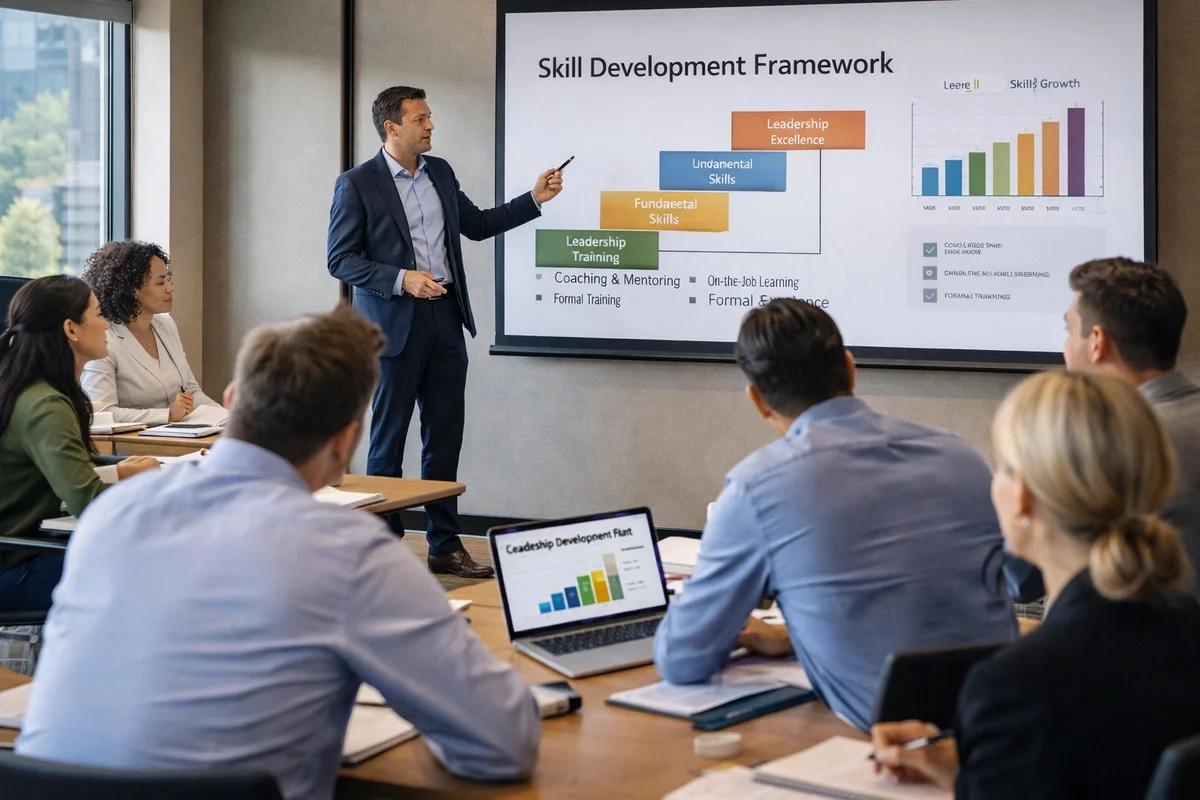
- Leadership development
- Coaching and mentoring
- Workshops
- Technical training
- Soft skills development
- Career planning
- On-the-job learning
The most effective development strategies connect employee learning with both individual career goals and organizational objectives.
Why Is Employee Development Important?
Improve Employee Skills
Training gives employees opportunities to develop the knowledge and skills required to perform their current roles more effectively.
Support Productivity
Employees with the right skills and knowledge can often complete tasks more efficiently and solve workplace challenges more effectively.
Prepare Future Leaders
Leadership development programs can help organizations prepare employees for future management and leadership responsibilities.
Support Organizational Change
Businesses frequently need to adapt to new technologies, processes, and market conditions. Employee development can help teams adapt to these changes.
Encourage Continuous Learning
A culture of continuous learning encourages employees to view professional development as an ongoing process rather than a one-time activity.
How Training Can Improve Business Performance
Training can contribute to organizational performance when it is connected to measurable business needs.
For example, sales training can focus on improving sales processes, while leadership training can focus on decision-making, team management, and communication.
Organizations should identify the capabilities they need before selecting training programs.
Building an Effective Employee Development Program
1. Identify Skills Gaps
Organizations should first understand the difference between current employee capabilities and the skills required to achieve business objectives.
2. Define Development Goals
Clear development goals make it easier to determine whether training is addressing the right needs.
3. Choose the Right Learning Methods
Different skills may require different learning approaches.
Organizations can combine:
- Classroom training
- Workshops
- Online learning
- Coaching
- Mentoring
- Practical assignments
4. Measure Training Results
Training should be evaluated to understand whether employees are applying their new knowledge and whether the program is contributing to business objectives.
5. Continue Development
Employee development should not stop after a single training session. Continuous learning allows employees to build on their existing knowledge and respond to new challenges.
The Role of Managers in Employee Development
Managers play an important role in helping employees apply what they learn.
Regular feedback, coaching, goal setting, and career discussions can help employees understand their development priorities.
Managers can also identify opportunities for employees to take on new responsibilities and practice new skills.
Employee Development and Business Growth
Organizations need capable people to support sustainable growth.
Investing in employee development can help businesses strengthen internal capabilities, prepare future leaders, and improve organizational adaptability.
Professional training can be an important component of this strategy when programs are aligned with real business requirements.
How HPA Supports Professional Development
HPA provides professional training and development solutions designed to help professionals and organizations develop practical business capabilities.
From management and leadership to specialized business skills, structured training can support employees in developing the knowledge required to perform effectively in changing business environments.
Conclusion
Employee development is an ongoing process that can benefit both professionals and organizations.
By identifying skills gaps, setting clear development goals, providing relevant training, and measuring results, organizations can create a workforce that is better prepared to meet current and future business challenges.
Investing in people is ultimately an investment in organizational capabilities and long-term performance.
Frequently Asked Questions
What is employee development?
Employee development is the process of helping employees improve their knowledge, skills, capabilities, and career readiness.
How does training improve employee performance?
Training can help employees develop relevant skills, improve productivity, solve problems, and adapt to changes in their roles.
Why should companies invest in employee development?
Employee development can help organizations strengthen internal capabilities, prepare future leaders, and support adaptation to changing business requirements.

You may also like

Workplace Culture
Leadership Development: How to Prepare Employees for Future Management Roles