
Business Analytics: How Data Can Improve Decision-Making
In today’s competitive business environment, organizations generate large amounts of data through sales, customer interactions, financial transactions, operations, and digital platforms. However, collecting data alone does not create business value. Companies need to analyze this information and turn it into useful insights.
Business analytics helps organizations understand their performance, identify trends, recognize potential risks, and make more informed business decisions. When used effectively, analytics can support everything from financial planning and marketing to operations, customer experience, and strategic management.
What Is Business Analytics?
Business analytics is the process of using data, statistical methods, reporting tools, and analytical techniques to understand business performance and support decision-making.
Instead of relying only on assumptions or intuition, organizations can use reliable data to answer important questions such as:
- What products or services are performing well?
- Which business activities generate the highest costs?
- What are customers buying?
- Where are operational problems occurring?
- Which areas require improvement?
- What trends may affect future business performance?
Business analytics connects data with business objectives, helping decision-makers understand what is happening and determine what actions should be taken.
Why Is Business Analytics Important?
Organizations operate in an environment where customer expectations, market conditions, costs, and competition can change quickly. Access to accurate business information can help management respond more effectively.
Business analytics can help organizations:
- Improve decision-making
- Monitor business performance
- Identify trends and opportunities
- Detect operational problems
- Understand customer behavior
- Control costs
- Reduce business risks
- Improve resource allocation
- Support strategic planning
The key is not simply having more data. The goal is to identify the information that is relevant to a specific business decision.
1. Collect Relevant Data
Effective business analytics starts with collecting relevant and reliable data.
Depending on the organization, useful data may come from:
- Sales systems
- Customer relationship management platforms
- Financial systems
- E-commerce platforms
- Marketing campaigns
- Employee systems
- Supply chain systems
- Website analytics
- Customer feedback
Businesses should focus on collecting information that supports clear business objectives rather than gathering data without a defined purpose.
2. Ensure Data Quality
Poor-quality data can lead to poor business decisions.
Before analyzing information, organizations should check whether the data is:
- Accurate
- Complete
- Consistent
- Up to date
- Relevant
- Properly organized
For example, duplicate customer records, missing financial information, or incorrect sales figures can affect reports and lead management teams to make inaccurate decisions.
Data quality should therefore be treated as an important part of the analytics process.
3. Track Key Performance Indicators
Businesses need measurable indicators to understand whether they are achieving their objectives.
Key Performance Indicators (KPIs) can vary depending on the organization and department.
Examples include:
- Revenue growth
- Profit margin
- Customer acquisition cost
- Customer retention rate
- Sales conversion rate
- Inventory turnover
- Employee productivity
- Customer satisfaction
Tracking the right KPIs allows management to identify changes in performance and focus attention on areas that require action.
4. Identify Business Trends
One of the major benefits of business analytics is the ability to identify patterns and trends.
For example, sales data may reveal that demand for a specific product increases during certain periods. Customer data may show that particular customer segments have higher retention rates. Operational data may reveal recurring delays in a specific process.
Identifying these patterns can help organizations plan resources, improve operations, and respond to changing market conditions.
5. Turn Data Into Action
Analytics becomes valuable when insights are translated into practical actions.
For example, if analysis shows that a product has declining sales, management can investigate the reasons behind the change.
Possible actions may include:
- Reviewing pricing
- Improving marketing activities
- Updating the product
- Investigating customer feedback
- Reviewing distribution channels
The objective is not simply to produce reports. The objective is to use information to improve business decisions.
6. Use Dashboards and Reporting
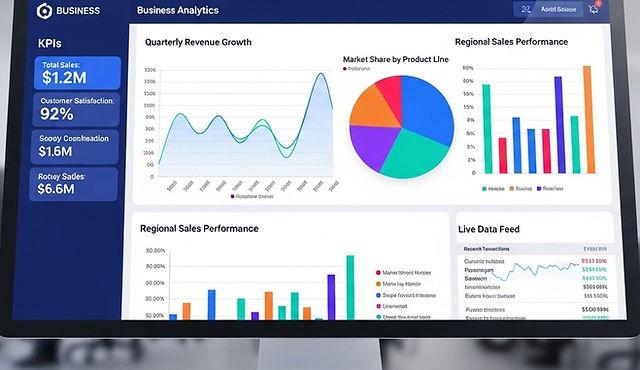
Business dashboards make complex information easier to understand.
A well-designed dashboard can bring important business metrics together in one place and allow managers to quickly monitor performance.
Useful dashboards may include:
- Sales dashboards
- Financial dashboards
- Marketing dashboards
- Operations dashboards
- HR dashboards
- Supply chain dashboards
Visual charts and KPI indicators can help decision-makers identify important changes without reviewing large amounts of raw data.

You may also like

Business Technology: How Digital Tools Improve Organizational Efficiency

Digital Transformation